

Description
Highlights of the Sovol SV08 Core-XY 3D Printer
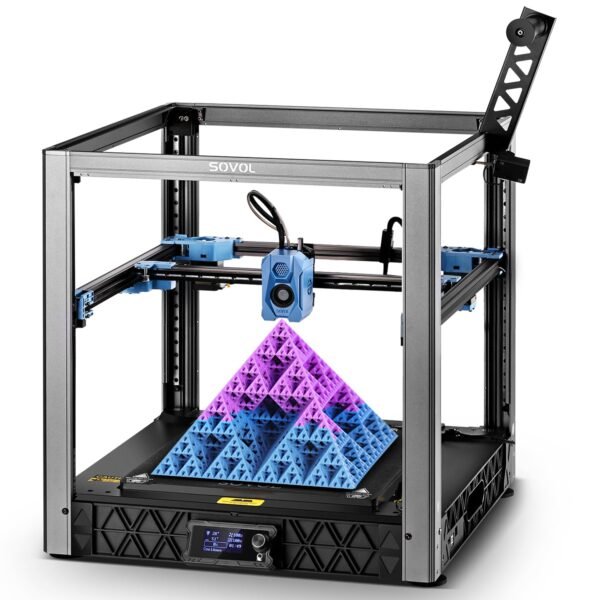
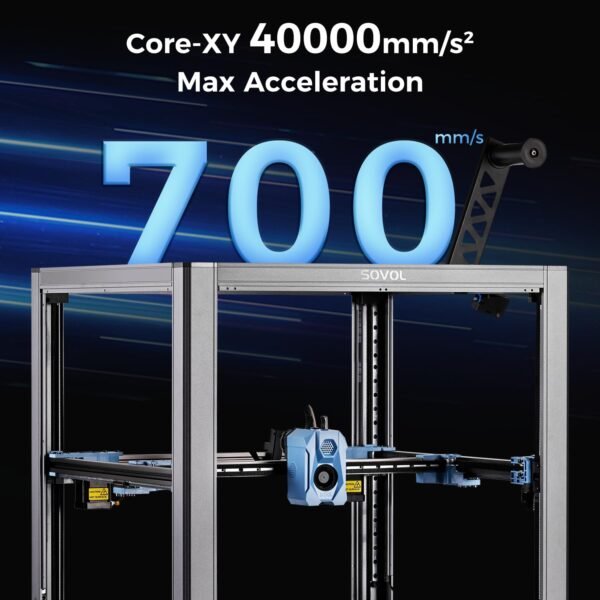
The Sovol SV08 Core-XY 3D Printer Voron 2.4 is an ambitious machine, built around its 700mm/s high-speed capability and large build volume of 350x350x345mm (about 13.8×13.8×13.6 inches). The CoreXY kinematics system reduces moving mass, which translates to smoother and faster motion control. This printer is designed for users who want to print large, detailed objects without worrying about slow speeds or limited space. The open-source nature of the printer and its slicer software also opens up extensive customization options.
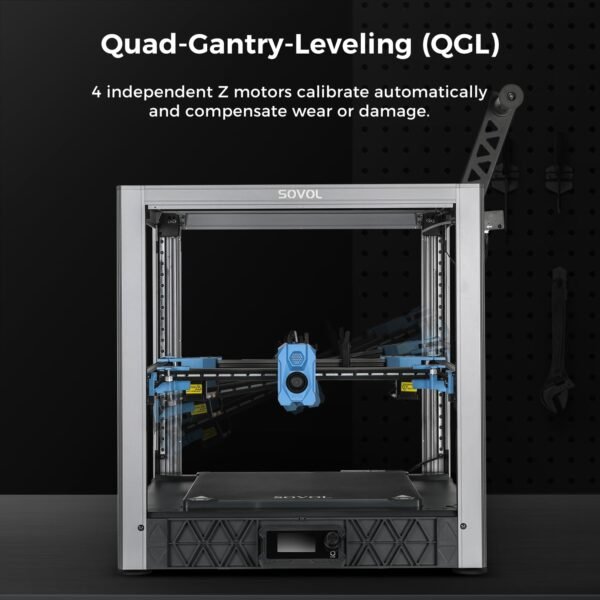
The feature that stands out most is the quad-gantry auto-leveling system with four independent Z motors. This is designed to remove the usual frustrations of manual leveling, keeping the print bed consistently aligned and reducing print failures. The pressure sensor for automatic nozzle-to-bed distance adjustment is a smart touch aimed at a repeatable first layer. Machines with this arrangement report far fewer failed prints, which matters most in a shared household or workshop where several people use the printer.
Advantages
- Blazing fast print speeds up to 700mm/s enabled by CoreXY mechanics.
- Quad-gantry auto-leveling with independent Z motors ensures superb print accuracy.
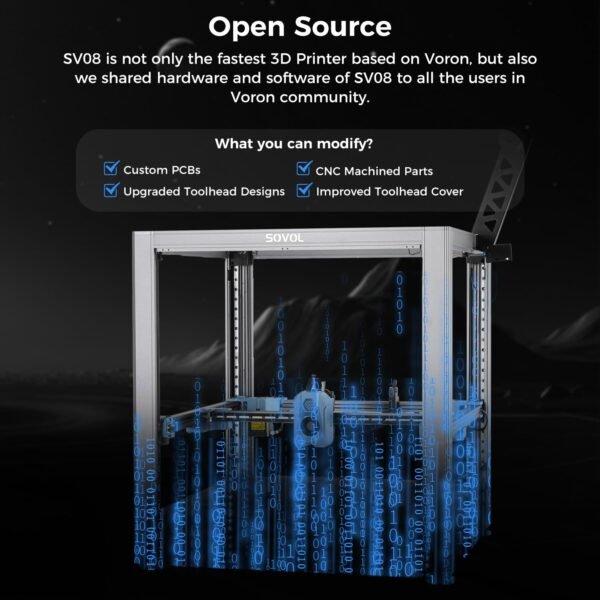
- Open-source design allows extensive customization and community-driven improvements.
- Rapid heating with a ceramic heating block and AC power heated bed reduces wait times drastically.
- Built-in camera and remote control provide real-time monitoring and capture time-lapses easily.
Limitations
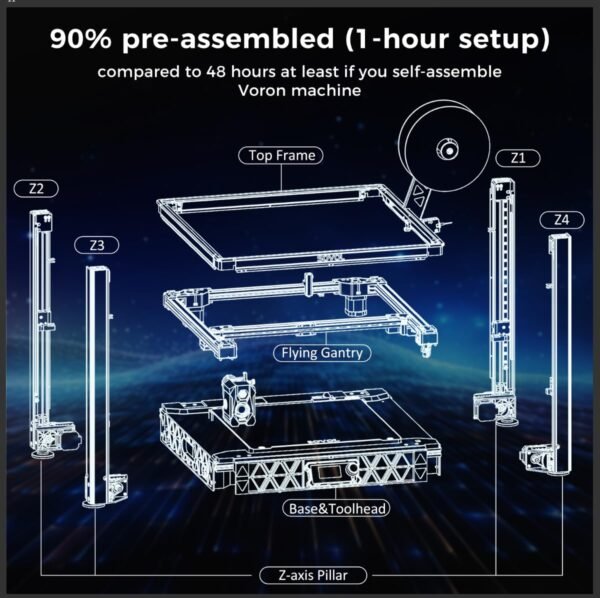
Despite the many perks, there are a few areas where this printer could improve. The noise level during operation is noticeable; it’s not a whisper-quiet machine, so if you plan to place it in a quiet room or office, expect some background hum. The assembly and initial setup can be tricky for those not familiar with CoreXY printers or open-source firmware like Klipper. Owners commonly report time spent troubleshooting on first use, especially configuring the slicer settings and fine-tuning the PID control for temperature stability.
Another downside is the weight and size: at 39 pounds and over 21 inches in each dimension, this printer demands a sturdy, dedicated space. It’s not something you casually move around, which might be inconvenient if you lack a permanent workshop or workspace. Additionally, while the cooling system with dual fans is effective at preventing filament warping, it can blow too aggressively on smaller prints, potentially impacting delicate details.
Performance and Features
The combination of Klipper firmware and the hardware setup pushes this printer into a league of its own. Klipper allows for advanced features like input shaping to minimize vibrations and pressure advance to improve extrusion consistency. The result is smoothness in prints, especially on corners and curves where typical printers might struggle. The PID tuning for both nozzle and bed heating is central to maintaining stable temperatures, which is crucial for working with different filament types.
Speaking of filaments, the heated bed reaches 220°C in about 40 seconds, and the nozzle hits up to 300°C quickly thanks to the ceramic heating block. That opens up a wide range of materials from PLA to PETG and even some specialty filaments without much hassle. The all-axis linear rails add to the precision and durability, making prints more consistent than the standard rod-and-bearing designs found on cheaper machines.
User Experience and Software
The OrcaSlicer software, which is open source and tailored for this machine, offers a clear and categorized interface that is straightforward to navigate. Features like variable line width, arc fitting, and segmented retraction help optimize prints, especially when dealing with complex geometries. Connecting the printer to a home network via WiFi allows remote monitoring through the built-in camera, including time-lapse capture of a long print while nobody is in the room. That level of convenience is a real plus.
Hobbyist 3D printer users consistently single out the automatic leveling system as the biggest time saver. However, the initial firmware setup is frequently described as steep for beginners, reinforcing that this printer is more suited to those willing to invest effort into learning and tweaking.
Downsides for Consideration
- Noticeable operating noise, not ideal for quiet environments.
- Initial setup complexity requires patience and some technical know-how.
- Size and weight make it less portable and demand a dedicated space.
- Cooling fans can sometimes overcool smaller prints, affecting fine details.
- Firmware and slicer setup might overwhelm beginners unfamiliar with open-source ecosystems.
Product Comparisons
Looking at similar CoreXY 3D printers like the Voron 2.4 and other brands such as Prusa and Creality, the Sovol SV08 holds its own with some unique advantages. Its quad-gantry leveling system is more capable than many competitors that rely on single or dual Z motors, providing better bed stability and print consistency. The open-source approach with the OrcaSlicer also places it ahead in terms of customization when compared to proprietary software solutions often bundled with other printers.
However, compared to Prusa’s ecosystem, the SV08 demands more user involvement during setup and troubleshooting. Prusa printers tend to be more plug-and-play, which might suit newcomers better. On the flip side, the SV08’s print speed and large build volume exceed many competitors, especially useful for makers wanting to push the limits on print size and speed.
Value for Money
Considering the features on offer, high-speed CoreXY mechanics, quad-gantry auto leveling, open-source firmware, and a robust cooling system, this 3D printer provides solid value for its price category. The large build volume paired with rapid heating elements means less downtime and more creative freedom. While there are some setup challenges and noise to contend with, the overall price to quality ratio makes it a compelling choice for users ready to dive into advanced 3D printing.
For hobbyists and professionals who want a versatile, high-performance 3D printer that is both customizable and capable of producing precise, large-scale prints, this device offers a lot without breaking the bank. If you’re comfortable with a bit of tinkering and want to avoid the limitations of smaller, slower printers, this is worth considering.
Boons for Creative Makers
The SV08’s ability to handle a wide range of filaments thanks to its rapid heating and stable temperature control is a huge boon. The built-in camera and remote control capabilities add a modern touch that enhances user experience, especially for those managing multiple prints or working remotely. The quiet yet powerful fans are specified to keep warping minimal and overhang quality high. The solid metal frame and precise linear rails also give the printer a durable feel that should hold up with heavy use.
This printer is a testament to how open-source designs can push 3D printing technology forward, blending speed, accuracy, and user control in one capable machine.