Description
Positives of the FLASHFORGE Adventurer 5M 3D Printer
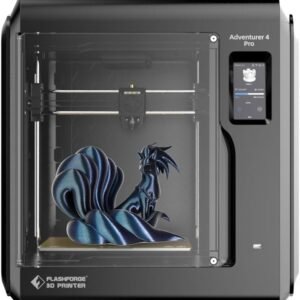
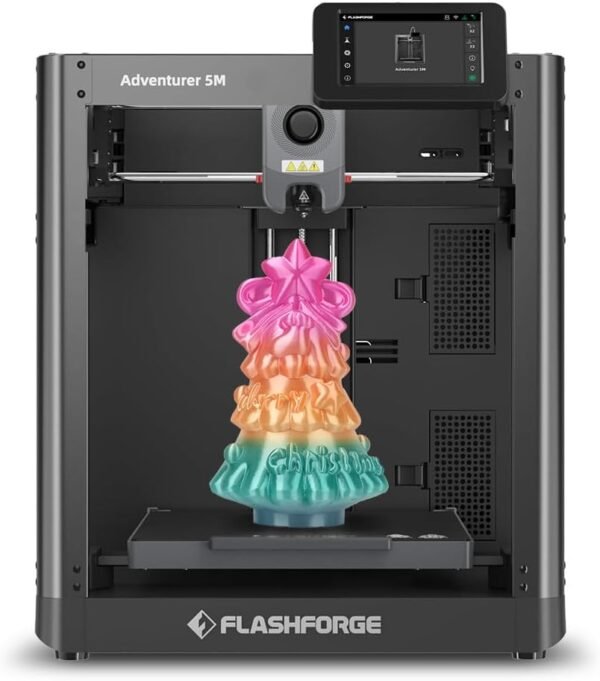
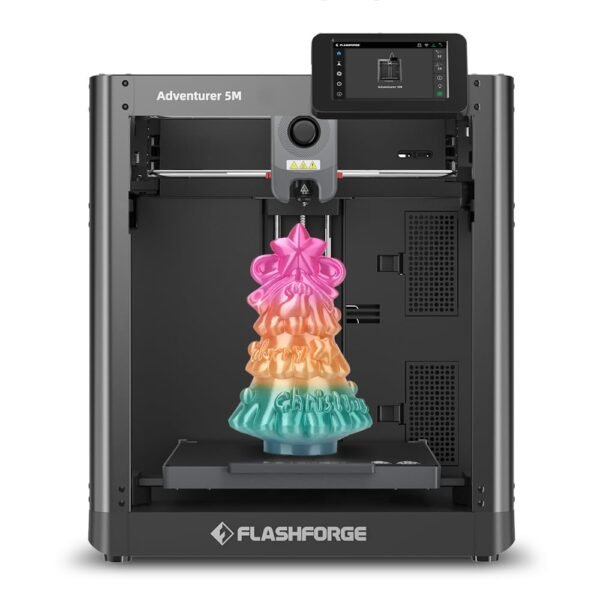
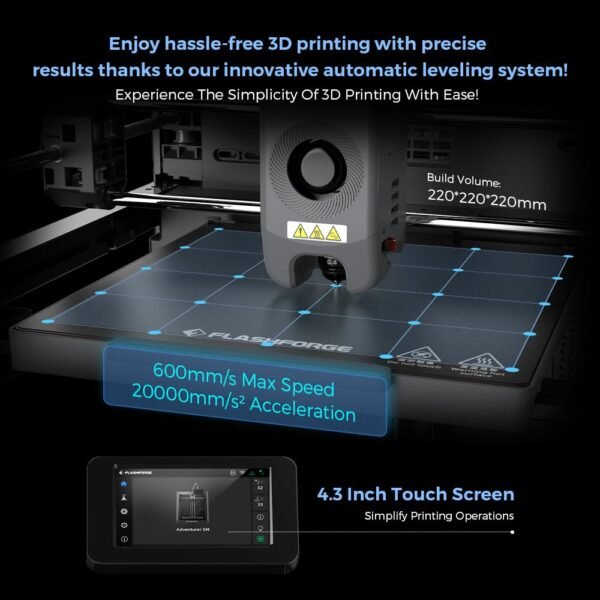
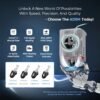
The FLASHFORGE Adventurer 5M leads on speed. Its ultra-fast printing speed is rated up to 600mm/s with a rapid acceleration rate that moves from zero to full speed in just 0.025 seconds. That cuts print times sharply while holding detail, which is the trade-off most fast printers fail. The full-auto one-click leveling system deserves a mention too; it handles first-layer calibration automatically, which is a relief because leveling beds on some other machines is a tedious job.
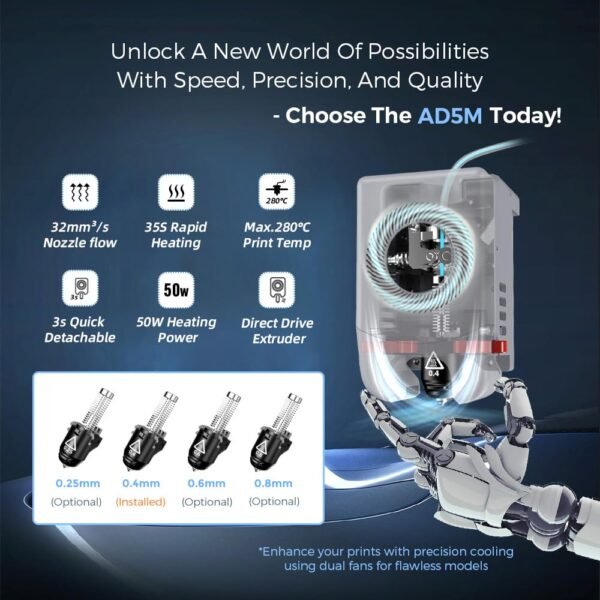
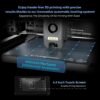
The vibration compensation technology is the other headline feature. It counters ghosting, producing smooth surfaces and detailed prints. With a 50W heater that reaches 200°C in 35 seconds, the nozzle heats up quickly and holds a consistent temperature, which is what keeps extrusion steady. The power loss recovery and filament run-out sensor are the two features that save a long print: mid-print power cuts and empty spools no longer mean starting over. The printer pauses and resumes without ruining the model, which is a significant safeguard on multi-hour jobs.
- High-speed printing with excellent acceleration
- Automatic bed leveling supports consistent first-layer adhesion
- Reliable filament run-out detection and power recovery
- Smooth, ghosting-free prints thanks to vibration compensation
Drawbacks to Consider
Despite its many merits, this printer does have a few quirks that might affect some users. For starters, the open-frame design means it’s best used in a well-ventilated area, which is a downside for anyone wanting a fully enclosed machine to keep noise and fumes contained. The print volume of 220x220x220mm is decent but not massive, limiting the size of projects one can tackle without slicing models.
Another point worth weighing is the weight. At nearly 24 pounds, it’s not the most portable printer, so frequent relocation might be inconvenient. The PEI-coated removable steel plate is flexible and great for adhesion, but a recurring owner complaint is that prints bond too firmly, making removal tricky without risking damage to the model or the plate itself. Also, while the direct extruder is upgraded and quick-detachable, some users may find it less suitable for very flexible filaments compared to Bowden setups.
- Open-frame requires good ventilation and can be noisy
- Print size limits large-scale projects
- Relatively heavy and less portable
- PEI plate adhesion can be too strong, complicating print removal
Ease of Use and Features in Practice
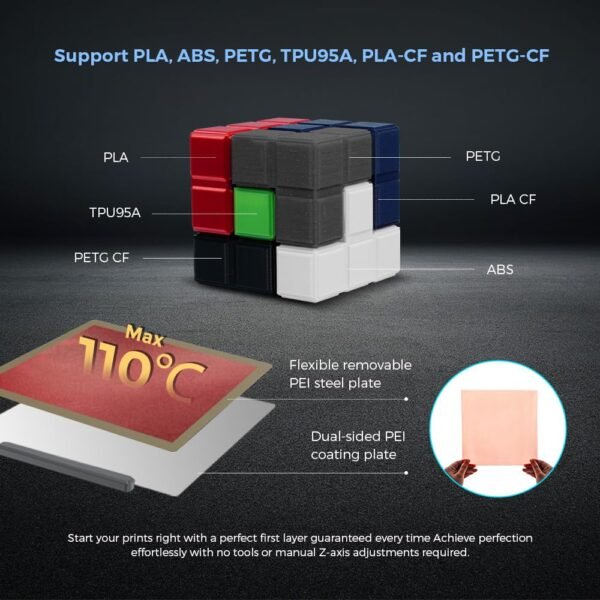
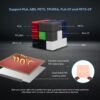
This is a machine aimed at home and classroom settings as much as workshops. The plug-and-play nature suits beginners, especially with the intuitive touchscreen interface that guides setup and operation. The quiet operation during most prints makes it workable in a home office without becoming a distraction. The variety of compatible filaments, including PLA, PETG, TPU, and even composite filaments like PLA-CF and PETG-CF, offers plenty of versatility for different project needs.
In workshop settings the standout is how quickly the Adventurer 5M switches between filament types thanks to the quick-detachable nozzle rated to 280°C. The ability to handle composite carbon fiber filaments with a larger 0.6mm nozzle adds a professional edge that not all hobbyist printers can claim.
Value Proposition and Price Worthiness
Considering the features packed into this 3D printer, its price performance is very reasonable. The fast setup time, with printing possible within minutes of unboxing, and the reliable auto-leveling system reduce the learning curve, which saves both time and frustration. This makes it a smart investment for users who want solid quality without fiddling endlessly with hardware adjustments.
While there are cheaper printers on the market, few offer such a combination of speed, precision, and user-friendly design. The robust build quality and inclusion of advanced features like filament sensors and power recovery justify spending a bit more than entry-level options. For those who want dependable prints, quick turnaround, and support for a wide range of filaments, this printer offers a compelling price-to-quality ratio.
Product Comparisons with Market Rivals
Comparing this model to some popular competitors reveals interesting trade-offs. For example, the Creality Ender 3 V2 is less expensive but lacks the auto-leveling and power recovery functions, meaning more manual calibration and risk during power interruptions. On the other hand, the Prusa i3 MK4 offers a larger print volume and more enclosed features but comes with a higher price tag and a steeper learning curve.
The FLASHFORGE Adventurer 5M excels in speed and convenience, especially with its full-auto leveling and quick heat-up times, which some rivals struggle to match. However, its open design may not be ideal for users needing a quieter or fully enclosed workspace. Its compatibility with advanced composite filaments also sets it apart, as many printers in this class do not support carbon fiber blends without added modifications.
Robust Design and Build Quality
The sturdy construction of this 3D printer is what makes the high acceleration figures usable. Built from solid materials and weighing 23.8 pounds, it sits firmly on a desk without wobbling, even during rapid movements. The dual-sided PEI coating on the flexible steel plate provides excellent adhesion for a range of materials, though it requires a bit of care during print removal.
The open frame allows easy access to components and makes maintenance straightforward, but it also means dust and debris can accumulate faster, so regular cleaning is necessary. The direct drive extruder is a welcome upgrade over Bowden systems, improving filament control and reducing issues with flexible filaments, though its performance varies slightly depending on the filament type used.
Versatility in Filament Compatibility
One of the standout features in daily use is the printer’s ability to handle diverse materials. The rated support covers PLA, PETG, TPU, and composite filaments. The 0.4mm nozzle works well with standard filaments, while the 0.6mm nozzle accommodates carbon fiber-infused materials, expanding creative possibilities.
The heated bed with dual PEI coating supports consistent adhesion across different filament types, minimizing warping and lifting. Flexible TPU is the material that most often needs attention, since direct extruders typically call for slower speeds to avoid filament jams. Even so, the material range is broad, making this printer a solid option for makers who like to experiment.
This review reflects a balanced view of the FLASHFORGE Adventurer 5M, drawn from its published specification, highlighting how its speed, ease of use, and filament versatility can benefit hobbyists and pros alike, while also noting practical considerations like the open-frame design and print size limitations.