

Description
Benefits of the FLASHFORGE AD5M 3D Printer
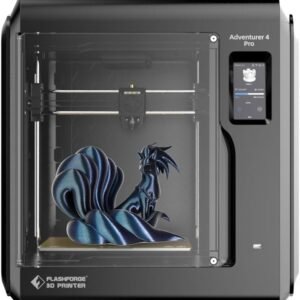
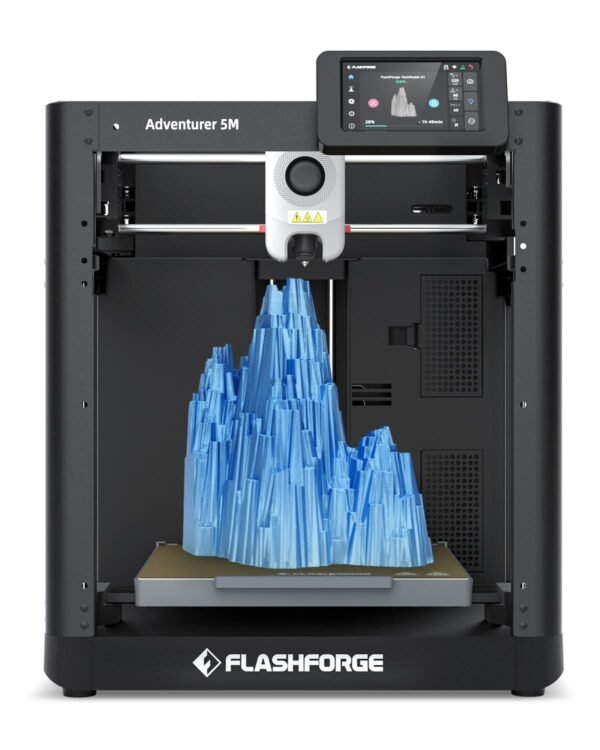
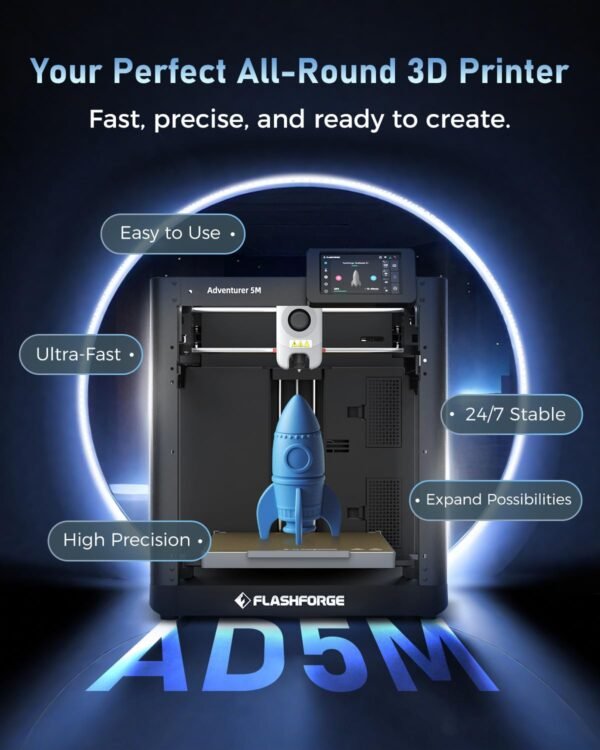
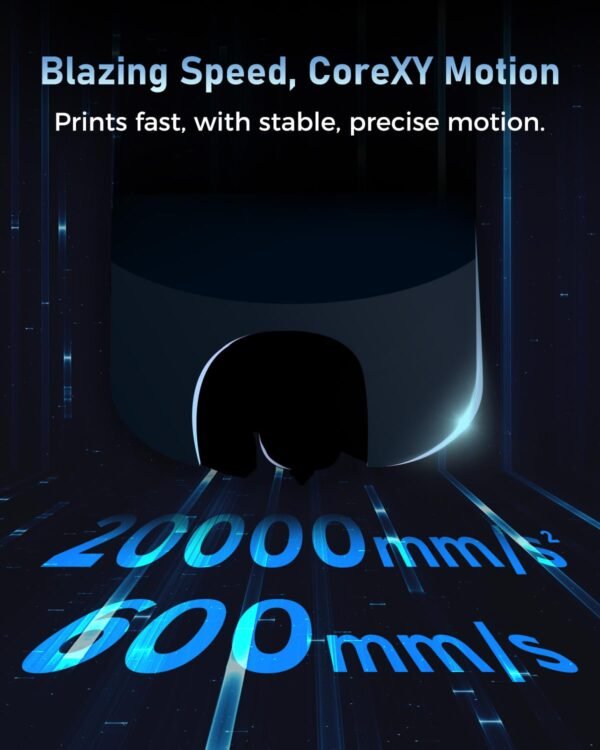
The FLASHFORGE 3D Printer AD5M is quite an ambitious machine. Its ultra-fast CoreXY printing capability, reaching speeds of up to 600mm/s with an acceleration of 20,000mm/s², truly stands out. Those figures point to prototypes coming off the build plate fast, which is a massive advantage if you’re in a hurry to iterate designs or produce multiple parts. The high-speed printing doesn’t sacrifice detail, either, thanks to the printer’s ability to handle nozzle sizes from 0.25mm to 0.8mm, allowing for a great balance between speed and precision.
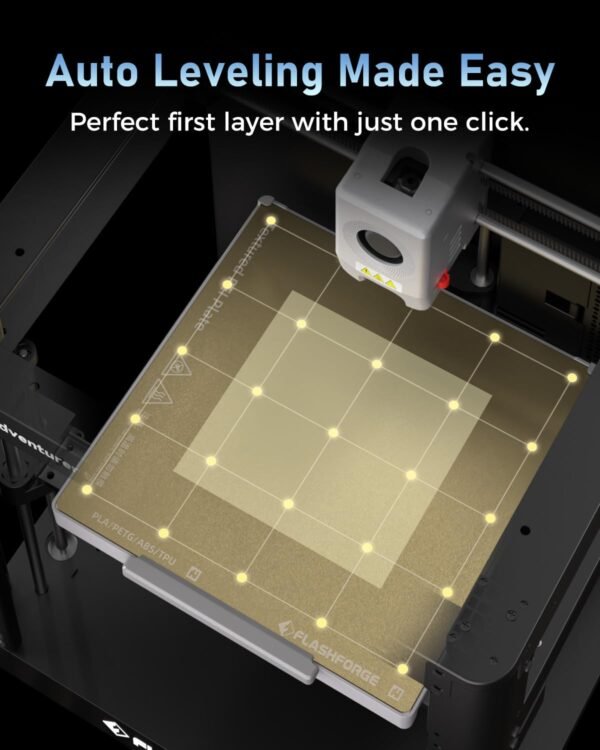
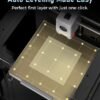
The 1-click auto-leveling feature is another game-changer. On many printers bed leveling is a frustrating, manual process, but this model’s pressure sensor takes care of it automatically. This means the nozzle height stays spot-on, delivering consistent first-layer adhesion. It’s reassuring to know that every print starts on the right foot, which cuts down on failed prints and wasted filament.
Highlights of Design and Build Quality
The robust metal construction of this 3D printer feels solid and durable. At 16 x 14 x 18 inches and weighing 27.6 pounds, it’s not the lightest, but it’s portable enough for a desktop setup without feeling flimsy. The CoreXY mechanism contributes to the high-speed capability and precision, and the frame is engineered to stay stable even during rapid movements, with no annoying wobbling or skipped steps.
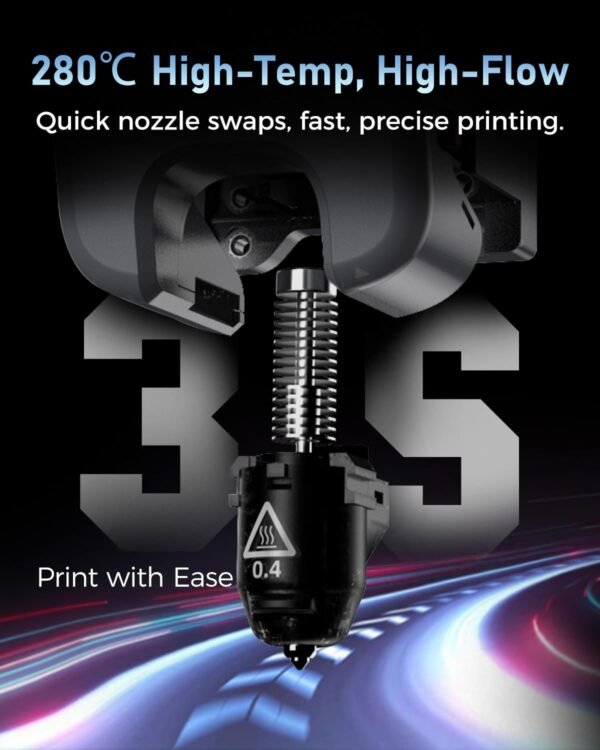
The direct drive extruder can reach temps up to 280°C, which broadens the range of materials you can print with, including some high-performance filaments. The dual cooling fans do a great job keeping prints crisp and preventing stringing, which counts for most when working with flexible materials. The quick-swap nozzle system, where you can change nozzles in about 3 seconds, is fantastic for anyone who likes to switch between detailed prints and faster drafts without fuss.
Smart Features and Usability
One of the perks of this printer is its smart control interface. Using the Flash Maker app, you can monitor the printing process remotely. This feature comes in handy when you have to leave the workspace but still want to keep an eye on the progress. The app not only shows real-time updates but allows parameter adjustments mid-print. The power loss recovery is built to rescue a print after an unexpected outage, and the filament runout detection prevents a frustrating failure by pausing the print and letting you reload filament without losing progress.
The printer supports open-source firmware and hardware upgrades, which is an exciting prospect for tinkerers. This flexibility means the printer can grow with your needs, from simple home projects to more complex, professional tasks. For those working in education or small-scale manufacturing, this openness could be a big plus.
Drawbacks to Consider
Though the performance figures are strong, a few limitations stand out. The printer’s size, while manageable, might feel bulky for users with limited desk space. Additionally, the absence of a default enclosure means that printing certain high-temp materials can be tricky unless you invest in the optional enclosure, which adds to the overall cost.
While the auto-leveling works well, it isn’t foolproof. Some prints need minor manual tweaks after the initial calibration, especially on uneven surfaces. The touchscreen interface, although responsive, can feel a bit sluggish, and navigating through menus could be more intuitive. For beginners, this might introduce a slight learning curve.
Product Comparisons
Compared to other CoreXY 3D printers like the Creality Ender 6 or the Prusa XL, this model shines with its combination of speed and precision. Ender 6 users might appreciate its lower price point, but the direct drive extruder and quick-swap nozzle system on this printer offer greater versatility. Prusa XL’s open-source nature is similar, but it lacks the ultra-fast printing speeds and smart app connectivity that the AD5M provides.
However, the lack of a built-in enclosure puts it behind some high-end competitors, especially those designed specifically for high-temp material printing. For users focused on ABS or other temperature-sensitive filaments, the extra cost of an enclosure can be a deciding factor. Still, the remote monitoring and recovery features give this machine a practical edge in busy or multi-tasking environments.
Value for Money
Considering the features packed into this printer, it represents a solid price to quality ratio. The speed, precision, and smart functionalities justify the investment, especially if you’re serious about rapid prototyping or running a small print farm. While it’s not the cheapest option out there, the combination of a high-temp extruder, auto-leveling, and app integration makes it worth every penny for users who want a reliable, efficient machine without constant tinkering.
That said, those on tighter budgets might find better entry-level options, albeit with compromises on speed or convenience. The availability of the open-source platform adds long-term value, allowing customization and upgrades as your skills or needs evolve.
Downsides Worth Noting
- The printer’s footprint and weight might be a challenge for cramped workspaces.
- The optional enclosure is almost necessary for printing with certain materials, increasing total costs.
- Touchscreen responsiveness could be improved to enhance user experience.
- Auto-leveling occasionally requires manual fine-tuning to get perfect prints.
Ease of Setup and Use
Out of the box, the printer comes with everything needed for a smooth start: a spool of 50g HSPLA filament, glue for bed adhesion, and a basic tool kit. Setup is relatively straightforward, with clear instructions. Newcomers to 3D printing should be able to get a simple model printing with minimal assistance, which speaks to the printer’s user-friendly design.
The 1-click leveling and quick nozzle swaps make experimentation less stressful. It also helps that the printer supports multiple nozzle sizes, which lets you optimize either for fine detail or rapid production runs. The dual cooling fans keep prints looking sharp, even with complex geometries.
Safety and Reliability
The machine’s power loss recovery and filament runout detection head off several potential frustrations. Losing print progress can be a nightmare, but this printer’s ability to pause and resume means fewer wasted hours and materials. The sturdy metal frame also gives a sense of durability and stability, which is reassuring when running long prints.
Overall, the printer is built to hold up under continuous use, and the firmware is designed for stability. Updates can be applied thanks to the open-source firmware, which is a rare but appreciated feature in this price category.
This 3D printer is an intriguing blend of speed, smart features, and flexibility. While it’s not without its quirks, the positives far outweigh the negatives for anyone looking to step up their 3D printing game with a machine that can handle both everyday projects and more demanding prints.