



Description
Highlights of the Franklin Sensors 710 Professional Stud Finder
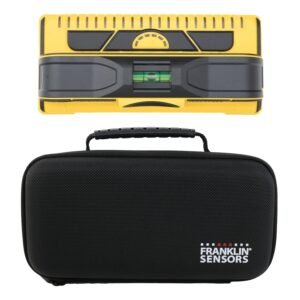
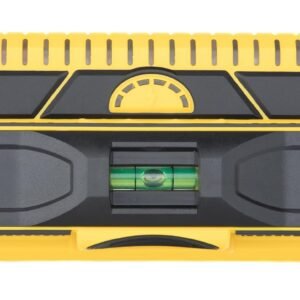
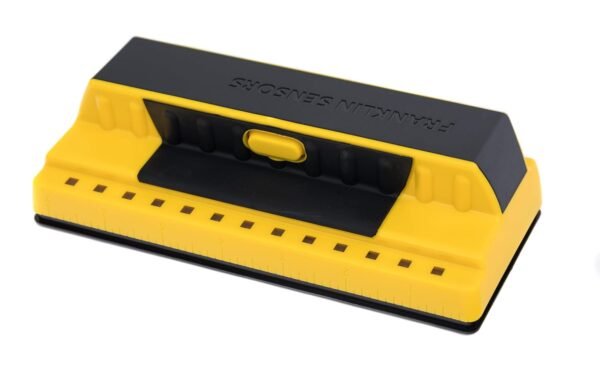
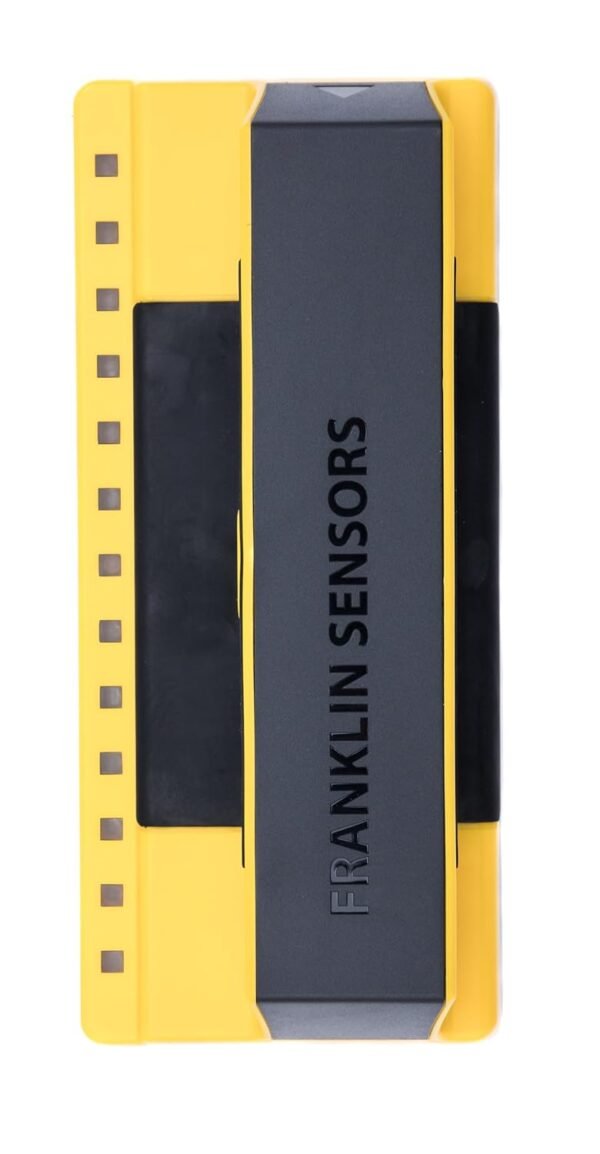
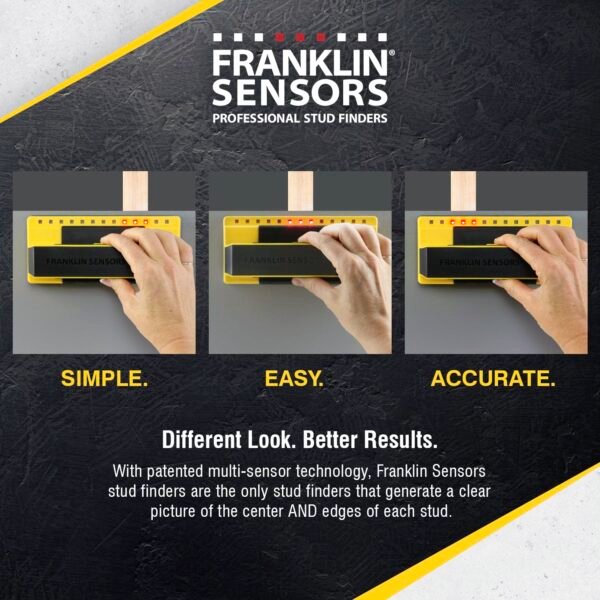
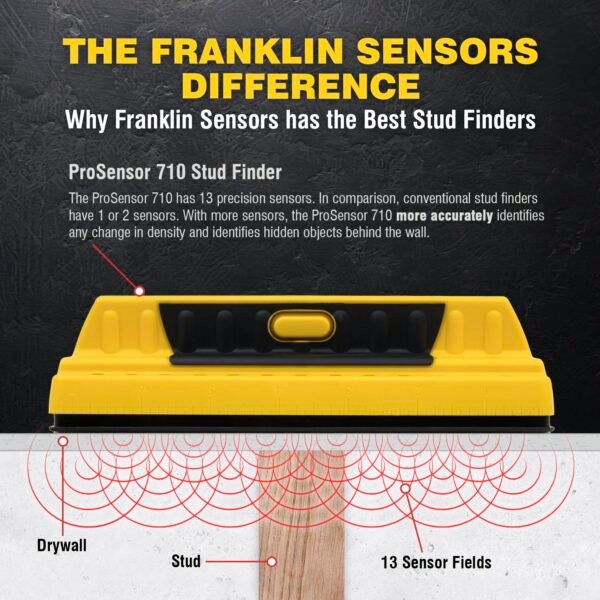
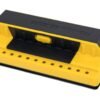
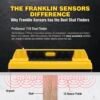
The Franklin Sensors 710 Professional Stud Finder stands out immediately for its innovative 13-sensor technology. Unlike traditional models that require sliding back and forth to locate studs, this device simultaneously scans thirteen points across the wall and lights up the areas where studs are detected in one pass. This makes stud finding a fast, effortless task with minimal room for error. The wide LED display is especially handy because it reveals the full width of the stud, showing both the center and edges at once. This feature removes a lot of guesswork when mounting shelves or hanging heavy frames. The auto-adjusting depth capability works through a single layer of drywall, scanning up to 1.6 inches deep, which covers most residential wall constructions.
Drawbacks and Limitations to Consider
Despite the many strengths, there are a few drawbacks worth noting. The device requires 2 AA batteries, which are not included, so a separate purchase is needed before the first scan. Battery life is decent, though a rechargeable option would be more convenient and less wasteful. Another minor issue is the size: at 7 by 3.4 by 2 inches, it’s a bit bulkier than some other stud finders, which might make it slightly awkward to handle in tight spaces. The yellow plastic casing feels sturdy but could attract dirt and smudges easily, which means it needs occasional cleaning to maintain its bright appearance. Also, it does not detect live wires, so wiring has to be double-checked with a separate voltage tester.
Accurate Performance and User Experience
Across various wall types and surface conditions, the rated accuracy is what this model leans on. The lateral accuracy within 0.25 inches is a tight specification, and it holds up on older plaster walls with uneven surfaces. The smooth plastic finish made it glide nicely over walls, and the single button operation is intuitive: press and hold, then watch the LEDs light up. Detection runs with no calibration step at all, which is a big time saver compared to other models that require fiddling with settings before use. DIY novices can pick it up without reading the manual, which says a lot about its user-friendly design.
Versatility and Practical Features
Beyond just finding wood studs, this tool also detects metal studs, which is essential for modern homes with steel framing. The ability to scan both wood and metal studs simultaneously widens its usefulness, particularly on apartment renovations with mixed framing. The full-size rectangular shape provides a stable grip, and the single plastic handle feels comfortable during prolonged use. Since it’s battery-powered with a 3-volt supply, it offers portability without the hassle of cords or chargers. However, the lack of a backlit display means using it in dimly lit basements or attics might be a bit challenging without extra lighting.
Competitive Options in the Stud Finder Market
Comparing this stud finder against popular competitors like the Zircon StudSensor or the CH Hanson 03040, the 710 stands out with its multi-sensor array and ability to show the full stud width. Many competitors rely on single or dual sensor technologies, which often lead to less precise detection and more trial and error. Zircon models sometimes require calibration and show only the center of the stud, which can cause misalignment when drilling. However, some rivals offer built-in wire detection or deeper scanning up to 2 inches, which the 710 lacks. The Franklin Sensors device is definitely a solid pick for accuracy and simplicity, but if wire detection is a must-have, pairing it with another tool might be necessary.
Value Proposition and Price Worthiness
Given the features and build quality, this stud finder offers true value for anyone serious about home improvement or professional contracting. It hits a sweet spot between affordable quality and reliable performance, which makes it a smart investment for those who don’t want to overspend but still expect precision. The patented sensor technology justifies paying a bit more than basic models. Plus, the fact that it is made in the USA adds confidence in its durability and support. While pricier than some entry-level finders, the time saved and frustration avoided with this device make it worth the premium for most buyers.
Practical Use Cases in the Field
Hanging a heavy mirror on an awkward wall is a good example of where this stud finder’s immediate LED feedback pays off. Extra holes and wasted anchors are avoided by seeing exactly where the studs start and end. Anyone mapping walls in a fixer-upper before demolition can use the scanner the same way, checking for load-bearing studs before anything is cut. Its smooth plastic body and easy-to-read LED indicators made it accessible even for people who aren’t handy with tools. On some older walls with thick layers of paint, the readings can be slightly less clear, so patience and a slow sweep are necessary.
Good Aspects You Should Know About
- 13 patented sensors for superior stud detection accuracy
- Wide LED display showing full stud width including edges
- Auto depth adjustment up to 1.6 inches through drywall
- No calibration step needed before scanning
- Detects both wood and metal studs
- Durable yellow plastic casing made in the USA
Areas for Improvement
- Requires 2 AA batteries not included; no rechargeable option
- Slightly bulky size can be awkward in tight spaces
- No built-in live wire detection, requiring a separate tool
- Lack of backlit display makes low-light use difficult
- Yellow casing prone to showing dirt and smudges easily
Overall, this tool blends accuracy, ease of use, and practical design in a way that makes stud finding less of a chore. Its unique sensor layout and clear display save time, though a few features like rechargeable power or wire detection would elevate it even further.