
Description
Highlights of the Klein Tools ET600 Megohmmeter Insulation Tester
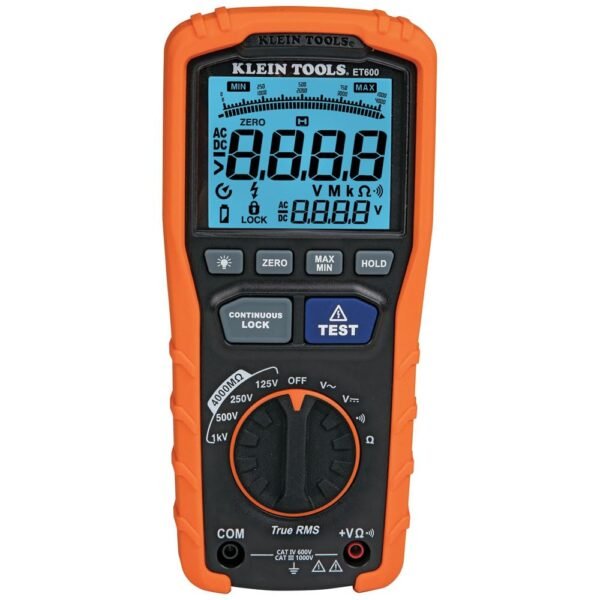
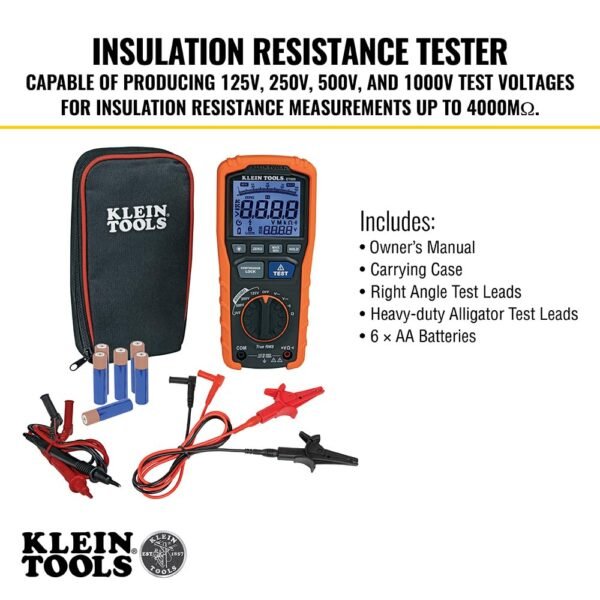
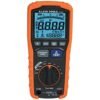
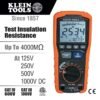
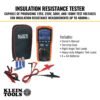
The Klein Tools ET600 Multimeter, Megohmmeter Insulation Tester packs an unusual amount into a single device. One standout specification is its ability to measure insulation resistance up to 4000MΩ at four selectable voltages: 125V, 250V, 500V, and 1000V DC. For anyone who regularly handles electrical diagnostics, this multimeter’s versatility is a huge plus. The inclusion of auto-ranging True RMS technology delivers accurate AC/DC voltage readings up to 1000V, a professional-grade specification that matters most on tricky circuits where voltage fluctuates.
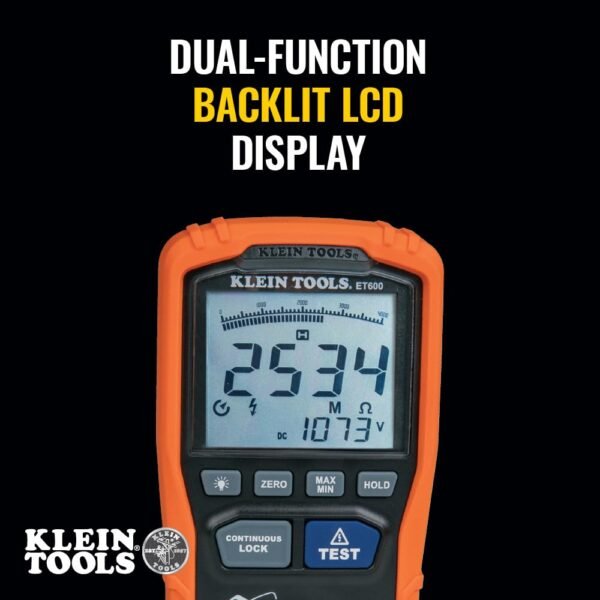
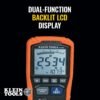
The lock function is a clever addition: it holds the measurement without continuous pressure on the test button, which helps when both hands are busy. The backlit dual-function display with a bar graph and icons for Max/Min, Hold, and High Voltage keeps results readable even in dimly lit spaces, like inside electrical panels or basements. The design was clearly specified with working electricians and DIYers in mind.
Drawbacks of the Device
Of course, no tool suits every job. The weight of 1.4 pounds might not sound like much, but it is enough to notice during extended testing sessions. The size, about 10 x 2 x 4.5 inches, makes it bulkier than some other compact multimeters, so it is not pocket-friendly. Battery life is somewhat limiting as well; it runs on six AA batteries, which are included, but heavy insulation testing draws on them quickly. The low battery indicator is useful, yet frequent replacements can be inconvenient on long jobsites.
Another minor gripe is the learning curve with the various voltage settings. While the multiple test voltages are a boon, toggling between 125V, 250V, 500V, and 1000V DC requires a bit of attention to avoid mistakes, especially when rushing through insulation tests. Lastly, the warning alarm meant to detect voltage is reported as overly sensitive around certain equipment, which can be a bit frustrating.
User-Friendly Features and Practical Applications
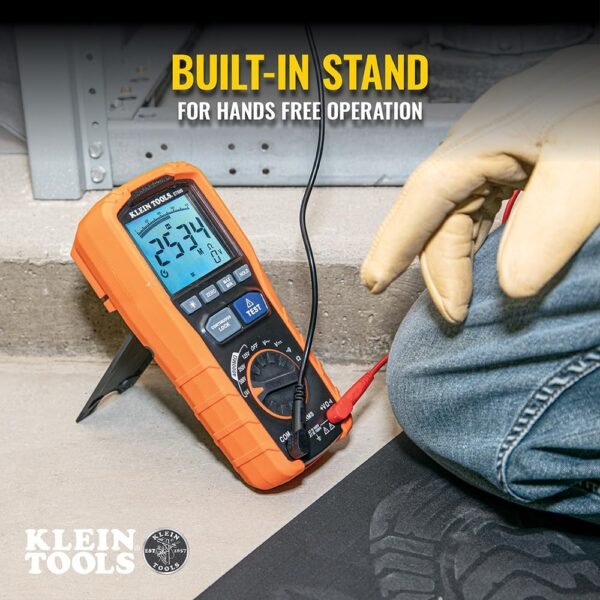
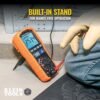
Hands-free operation is a real differentiator here. The built-in stand supports the device upright, freeing both hands during testing: a genuine advantage for solo work. The standard CAT III/CAT IV safety-rated test leads with heavy-duty alligator clips add to the device’s reliability, making it easy to connect securely to wires and components without worrying about accidental slips.
The digital display and audible alerts draw attention, but this is not a device for casual home use given its professional-level complexity and the voltages it can output. The continuity and resistance measurements complement the insulation testing, turning this into a multifunctional tool that can replace several others in a kit. It is aimed squarely at troubleshooting motors, transformers, and wiring insulation integrity, confirming that circuits are safe and functioning as intended.
Drawbacks for Consideration
- The device’s bulkiness can be a hassle when trying to carry it in a tight toolbelt or small bag.
- Battery consumption is on the higher side, so spare AA batteries are worth keeping handy.
- The sensitivity of the high voltage alarm sometimes leads to false positives.
- The manual toggling between voltage test settings requires careful attention to avoid confusion.
Competitive Options in the Market
Comparing this multifunctional tester to other well-known brands like Fluke and Extech, the Klein Tools model holds its own firmly in terms of insulation resistance testing capabilities and safety ratings. Fluke’s insulation testers often come with a sleeker design and sometimes better battery efficiency, but they tend to be pricier. Extech models offer simplicity and portability but may lack the broad voltage testing range that this device provides.
One edge for the Klein Tools ET600 is its dual-function backlit display and lock feature, which competitors do not always match for clarity. However, if you need ultra-compact gear, other brands might suit better. For heavy-duty professional use, though, the Klein’s robust build and comprehensive voltage options give it a serious advantage in reliability and versatility.
Value for Money
Considering the multifunctionality, safety certifications, and accuracy provided by True RMS technology, this tester offers solid value for money. It’s not the cheapest tool on the market, but it’s specified to withstand the rigors of professional environments and deliver precise insulation resistance and voltage measurements, which justifies the investment. The inclusion of CAT III/CAT IV-rated test leads and a sturdy carrying case (if you get it as part of a bundle) adds to the overall package.
For anyone who needs an all-in-one tester capable of handling insulation testing alongside standard multimeter functions, this device is a smart buy. It saves you from juggling multiple instruments without sacrificing accuracy or safety. However, if your tasks are simpler or you prioritize portability over function, exploring cheaper or smaller alternatives might be worthwhile.
Usability and Interface
The user interface combines buttons for testing, locking, and selecting voltage levels with an intuitive display that shows both numeric values and graphical bars. This makes it easier to interpret results quickly, especially when working in noisy or low-light environments. The auto-power-off feature helps conserve battery, which is practical, although owners note it can trigger mid-use during longer measurements, forcing a restart of the process.
The warning icons and audible alerts contribute to safety by signaling the presence of dangerous voltages, but as mentioned earlier, the sensitivity could use some refinement. Overall, the device is sturdy and well-built, with the familiar orange and black Klein Tools color scheme that stands out in a cluttered toolbox.
Versatility for Different Users
This tester is a solid fit for electricians, maintenance technicians, and serious DIY enthusiasts who need to verify insulation conditions and perform comprehensive electrical diagnostics. The display makes it look approachable, but casual use is a bad idea because of the high voltages it can output during insulation testing. The multiple measurement capabilities including AC/DC voltage, resistance, continuity, and insulation resistance testing make it a versatile tool that can streamline many electrical troubleshooting tasks.
In summary, this tester stands out for its robust functionality, safety features, and accuracy, although it comes with a few quirks like weight and battery life that might not suit everyone’s workflow. It holds its ground well against competitors and offers a package that balances professional-grade performance with user-friendly elements.