
Description
Highlights of the Klein Tools ET140 Moisture Meter
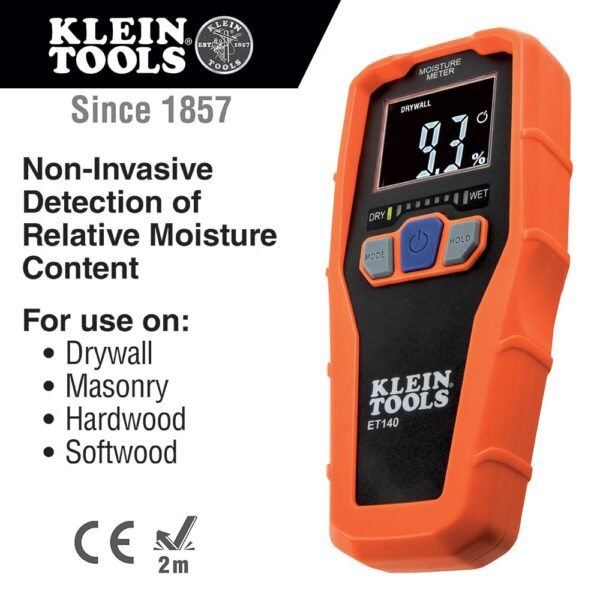
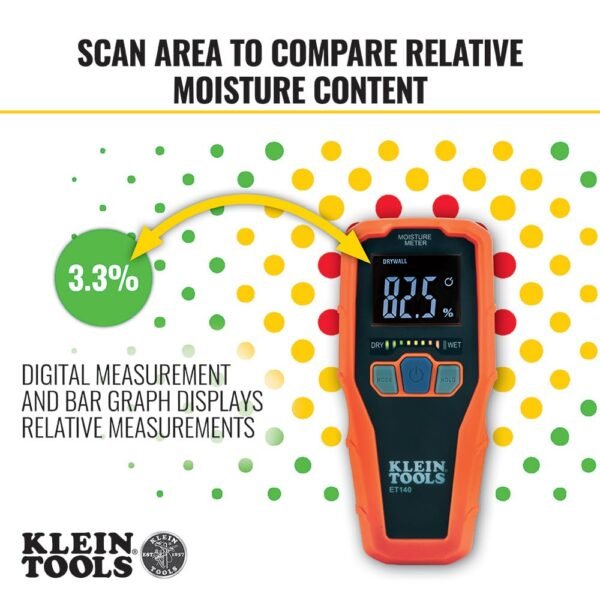
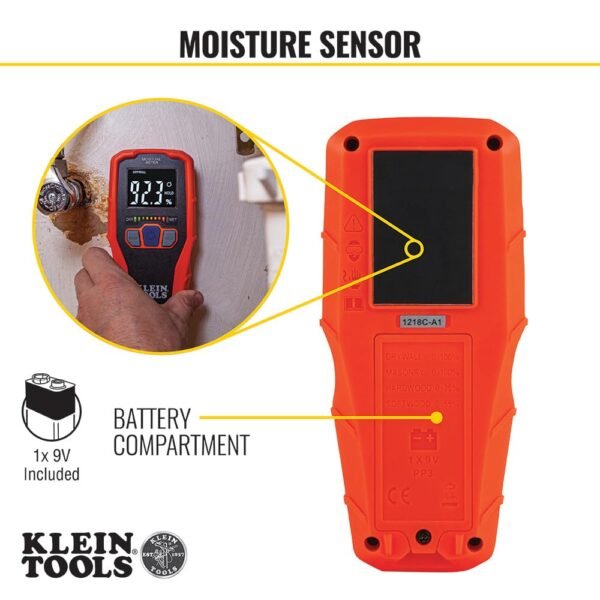
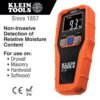
The specification sheet for the Klein Tools ET140 Pinless Moisture Meter lists several features that stand out. The nondestructive detection capability up to 3/4-inch below the surface is the headline. It uses electromagnetic field (EMF) technology to detect moisture without poking holes or damaging drywall, wood, or masonry. This means no more guesswork or unnecessary repairs, especially when inspecting walls or floors for hidden leaks.
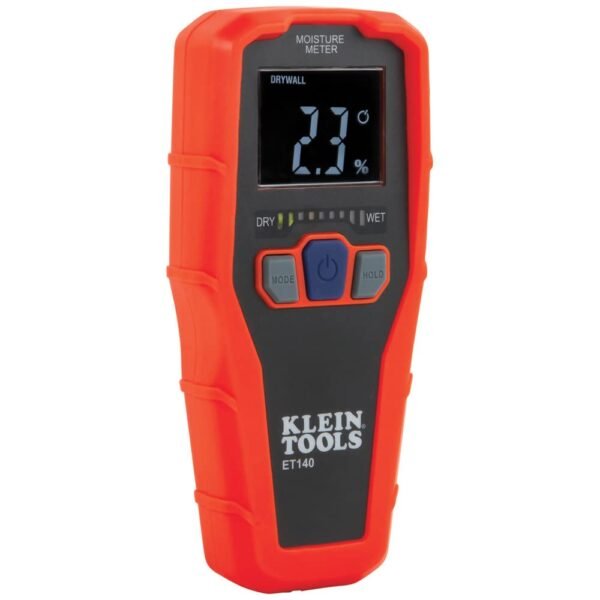
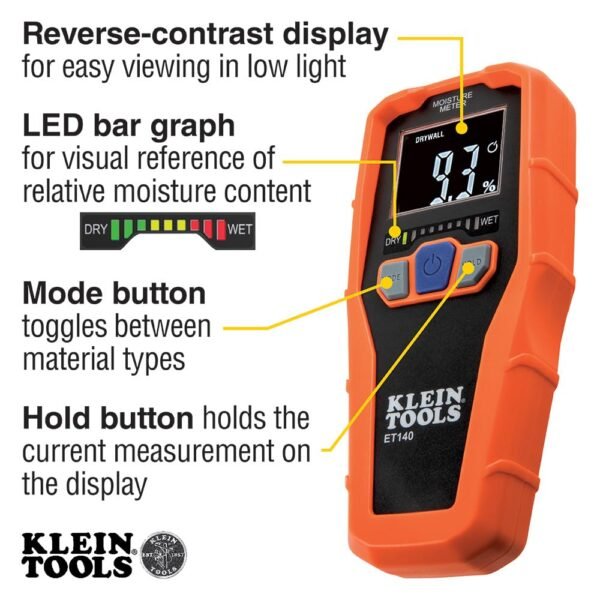
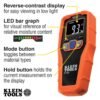
Switching between materials is straightforward with the mode button, which calibrates the meter for drywall, masonry, hardwood, or softwood. The reverse-contrast display is designed to stay readable even in dimly lit basements or cluttered workshops. The nine LED bars give a clear indication of moisture content range, which gauges the severity of moisture without needing to interpret numbers alone. Plus, the auto-power off and low battery indicators ensure you’re not left stranded mid-inspection.
Drawbacks to Consider
Despite its many strengths, there are a few limitations worth noting. For example, the meter is only calibrated for four specific materials, so if your project involves other surfaces, you might not get accurate readings. Treated wood and composite materials fall outside that calibration set, so readings on them are unreliable.
The size and shape of the meter are a bit bulky in hand compared to sleeker models on the market. Although it weighs just under six ounces, the design could be more ergonomic for prolonged use. The freestanding mounting is handy, but there’s no clip or case included, which means extra care is needed to avoid dropping it during site work.
Price Worthiness for What You Get
Considering the features and build quality, this moisture meter offers solid value for money. The inclusion of a 9V battery, a 2m drop protection rating, and a detailed instruction manual add to the overall package. While more expensive meters come with extra bells and whistles like Bluetooth connectivity or data logging, this tool does precisely what it’s meant to without unnecessary complications.
For anyone needing reliable moisture detection in common building materials, it’s a budget-friendly choice that doesn’t sacrifice accuracy or durability. It suits home renovations in particular, where moisture issues can hide behind drywall or hardwood floors, preventing costly surprises down the line.
User Experience and Practicality
Owner feedback frequently notes how quickly the meter flags hidden moisture spots, which converts skeptics of pinless designs. The hold function is a nice touch, allowing you to freeze the reading when working in awkward spots or tight corners. The masonry mode is the one most often cited for older walls where moisture intrusion is suspected, with readings that track visual signs of dampness.
On the flip side, the display’s brightness might be too glaring for some users in very dark conditions, and the buttons require a firm press, which could be tricky if you’re wearing gloves. Storage is another minor hassle since the device doesn’t come with a protective case, so keeping it scratch-free while on the job is a bit of a challenge.
Product Competitors in Moisture Detection
Comparing this moisture meter to competitors like the General Tools MMD4E or the Delmhorst BD-2100, the Klein leads on ease of use and noninvasive detection depth. While some rivals offer pin meters that penetrate surfaces for direct moisture content, the Klein’s pinless technology avoids damage altogether, making it well suited to professional inspections where preserving material integrity is crucial.
However, models like the Delmhorst include more advanced features such as temperature compensation and data logging, which this meter lacks. The General Tools model is sometimes cheaper but less durable and lacks the bright, reverse-contrast display that is a real asset here. In terms of accuracy on drywall and wood, the Klein meter holds its own, but for specialized woodworkers or contractors needing deeper diagnostics, more sophisticated tools might be preferable.
Versatility Across Different Materials
The Klein tool’s ability to switch between drywall, masonry, hardwood, and softwood is highly practical. The material-specific calibration in each mode is the reason its accuracy holds up better than generic meters. The masonry mode, for instance, is specified to read moisture behind brick walls, a case that trips up many other devices.
That said, the calibration is limited to these materials, so it is not the right pick for exotic woods or composite surfaces. Another point: the detection depth maxes out at 3/4-inch, which covers most applications but might not be enough for thicker walls or layered flooring systems.
Positive Features That Make a Difference
- Pinless moisture detection prevents surface damage, saving time and repair costs.
- The bright, reverse-contrast display and LED bar graph make readings easy to interpret in various lighting conditions.
- Material-specific calibration modes enhance accuracy across drywall, wood, and masonry.
- Auto power off and low battery indicators contribute to user convenience and battery longevity.
Areas for Improvement
- Limited calibration options restrict use on non-standard materials.
- The device’s bulkier design could be uncomfortable for extended use.
- Lack of a protective case means more care is needed to avoid damage.
- Buttons are less responsive when wearing gloves or in cold conditions.
This moisture meter from Klein Tools is a solid, no-nonsense instrument for anyone needing to track down moisture issues without drilling holes or damaging surfaces. Its professional-grade construction and straightforward interface make it a dependable addition to a working toolkit, especially for quick inspections or regular maintenance checks. Anyone tracking room humidity alongside surface readings can add a psychrometer such as the Fieldpiece PRH2.